
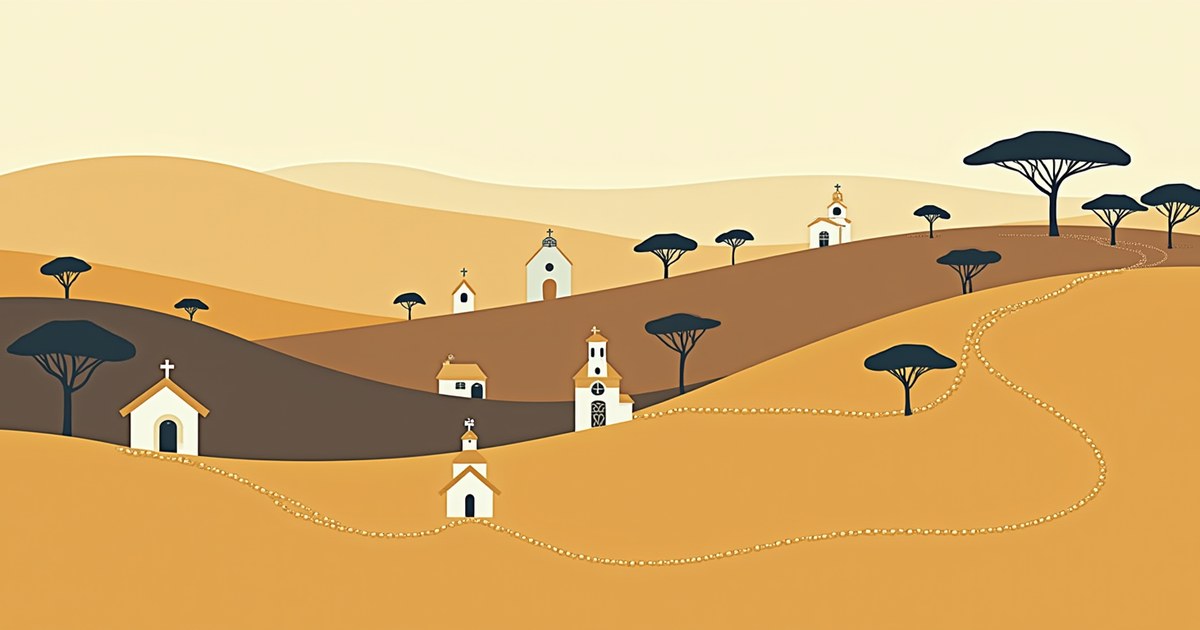

PCEA Namanga Nendeni Mission Area began in 1993, when Lang’ata Parish, coordinating with Ngong Hills Presbytery, held a mission convention at Namanga on Kenya’s border with Tanzania, from 5th March 1993. Namanga Town Church became the first congregation; from there the mission spread to Olmollelian in the Maparasha area, then Ilpartimaro, and onward — until today the mission area counts 17 congregations across the Maasai communities of Kajiado. It is the newest and most mission-focused member of PCEA Milimani South Presbytery’s family, currently served by Rev. Ruth Nasieku Mutembei.
Most of Milimani South Presbytery’s parishes tell the story of Nairobi estates: staff quarters, school halls, and city plots. Namanga Nendeni tells a different story — of a church that packed up and went 170 kilometres down the Kajiado road to the Tanzanian border, and kept going. Nendeni is, fittingly, the word of the Great Commission: “Go.”
A Convention at the Border, 1993
Namanga Mission Area was started in 1993. Lang’ata Parish, coordinating with Ngong Hills Presbytery, held a convention at Namanga beginning on 5th March 1993 — and the preachers at that founding convention reflect how wide the church cast its net for this work:
- Rev. Patrick Rukenya — then Deputy Secretary General of the PCEA
- Rev. John Gathaiya — Oloolaiser, Ngong
- Rev. Kingsley Nyirenda — from Malawi
- Rev. Samuel Ole Nakeel — Ongata Rongai
Out of that convention, Namanga Town Church was born — the first congregation of the mission area. Among its first few members were Victoria Njoroge, Hanna Wangare, Ruth Wanjohi, Wangare Mucigi, and Maria Munyapara. And the mission’s record insists that one name not be forgotten: Mr. Noah Ole Kishil, who identified the site where Namanga PCEA Church stands today.
From One Congregation to Seventeen
What happened next is the pattern of Acts repeating itself in southern Kajiado. From Namanga, the church opened a congregation at Olmollelian in the Maparasha area. From Olmollelian others followed — Ilpartimaro among the first. Congregation planted congregation, outstation became sanctuary, until today the mission area counts 17 congregations: Letoire, Namelok, Ilpatimaro, Ilkeek Oigero, Ilbissil, Iltareto, Olchorro Oibor, Namanga, Mailua, Enjorro, Maili Tisa, Nkujuka, Ewang’an, Maparasha, Namunyak, Ngatateak, and Enyoratta.
As the mission’s own record puts it with disarming honesty: a few are big, many are small — and now well organized. That is what pioneer church life looks like on the ground.
Among them, Mailua deserves special mention: its permanent 200-capacity sanctuary was built by PCEA Karen Church as part of its Nendeni Mission outreach — a congregation that was itself still worshipping in tents at the time. We told that remarkable story in our history of Karen Central Parish.
The Ministers Who Laid the Foundation
The mission’s record honours a long line of ministers who were instrumental in Namanga’s early days and growth: Rev. Charles Maina Ndung’u, Rev. Timothy, Rev. Moses Maara, Rev. Samuel Ole Nakeel, Rev. Kingsley Nyirenda, Rev. John Nina Mwakishonda, Rev. Benson Lila Kishoyian, Rev. Samuel Ole Koipa, Rev. John Mambo, Rev. Titus Ole Runda, and Rev. Lutangilo Yonamu Mwinuka. The current minister is Rev. Ruth Nasieku Mutembei.
The list itself tells a story: names from central Kenya alongside Maasai names, a Malawian missionary alongside Kenyan ministers — a mission field that became a mission family.
Raised by Many Mothers
No mission area grows alone, and Namanga Nendeni’s record is generous in naming the “mother parishes” that carried it — spiritually and materially. From today’s Milimani South Presbytery: Karen West, Lang’ata, Nairobi West, Riruta, Mutu-ini, Dagoretti, Waithaka, and Karen Central. And from parishes now under Milimani North Presbytery: Kangemi, Loresho, and Evergreen.
That means essentially every parish in Milimani South Presbytery has invested in Namanga — the mission area is, in a real sense, the whole Presbytery’s shared child. It is also its frontier: seventeen congregations serving Maasai communities across a vast, sparsely settled borderland, with all the distances, resources gaps, and opportunities that implies.
Frequently Asked Questions
When did PCEA mission work in Namanga begin?
In 1993, with a convention held at Namanga from 5th March 1993, organized by Lang’ata Parish in coordination with Ngong Hills Presbytery. Namanga Town Church was the first congregation established.
How many congregations are in the Namanga Nendeni Mission Area today?
Seventeen, spread across the Maasai communities of southern Kajiado — from Namanga town itself to congregations like Mailua, Ilbissil, Maparasha, and Enyoratta.
Who serves the Namanga Nendeni Mission Area now?
The current minister is Rev. Ruth Nasieku Mutembei, continuing a line of ministers that has included Kenyan and international clergy since the mission’s founding.
Final Thoughts
In thirty years, Namanga Nendeni has gone from a single convention tent at the border to seventeen congregations across Maasai land — planted by one parish, raised by a dozen, and now standing as Milimani South Presbytery’s living answer to the command its name carries: Nendeni. Go. The mission area’s story is not finished; if its own history is any guide, congregation eighteen is already being prayed into existence somewhere along the Kajiado road.
Want to Support the Namanga Nendeni Mission?
The Presbytery’s mission work in Kajiado continues to grow. Reach out to learn how you or your congregation can take part.
Historical details in this article are drawn from PCEA Milimani South Presbytery’s own published mission records. Compiled by the Editorial Desk.