
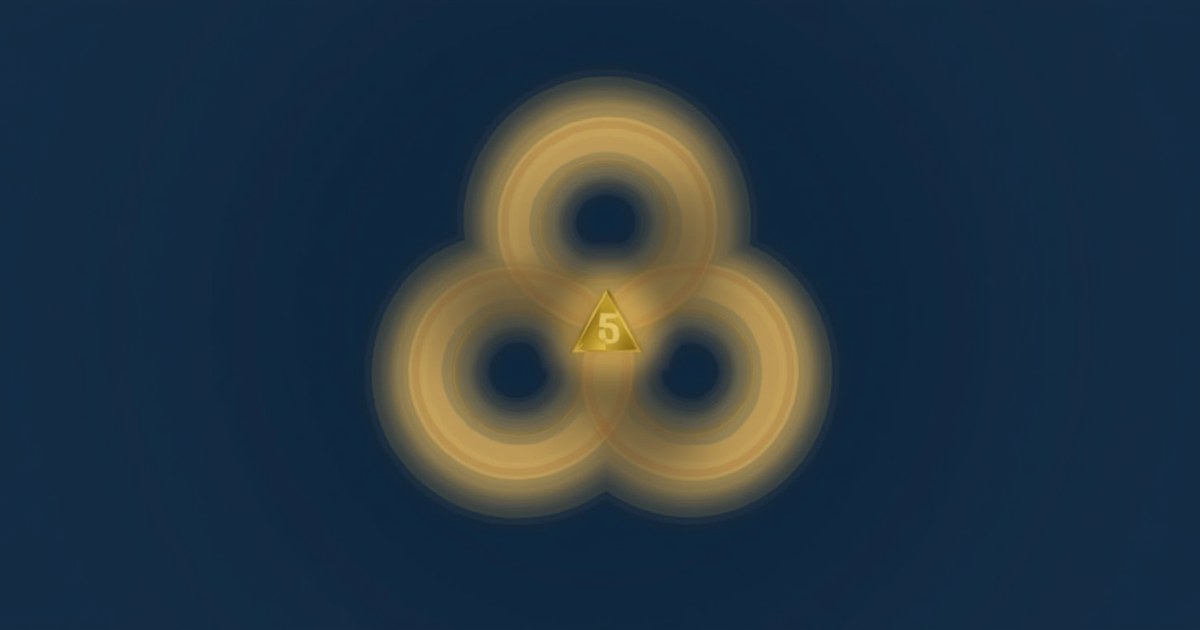

The Trinity means there is one God who exists eternally as three distinct persons — Father, Son and Holy Spirit — each fully God, all of one substance. It is not three gods, and not one God wearing three masks. The word isn’t in the Bible, but the teaching is: Scripture names all three together (Matthew 28:19; 2 Corinthians 13:14). The Westminster Confession, the PCEA’s standard, puts it in Chapter 2.
“May the grace of the Lord Jesus Christ, and the love of God, and the fellowship of the Holy Spirit be with you all.”
— 2 Corinthians 13:14
Someone asks you: “How can God be three and one?” You freeze, and then reach for an analogy about an egg. Stop. That is the fastest way into a heresy. Here is a simpler and more honest way to talk about the Trinity.
What Christians Claim, and What They Don’t
The historic claim, in the Apostles’ Creed, the Nicene Creed and the Westminster Confession, is this: there is only one God (Deuteronomy 6:4), and this one God eternally exists as three persons — the Father, the Son and the Holy Spirit — who share one divine nature. The persons are distinct but not separate. The Father is not the Son, the Son is not the Spirit, yet each is fully God. What the Trinity does not say is that there are three gods (polytheism), or that one God simply switches roles (modalism), or that the Son and Spirit are lesser beings than the Father (Arianism).
You Can See It in the Bible
At Jesus’ baptism, the Son is in the water, the Spirit descends like a dove, and the Father’s voice speaks from heaven (Matthew 3:16-17). Jesus tells his disciples to baptize “in the name of the Father and of the Son and of the Holy Spirit” — one name, three persons (Matthew 28:19). Paul closes his letters with the same shape, as in the verse above. And John opens his Gospel with a striking claim: “In the beginning was the Word, and the Word was with God, and the Word was God” (John 1:1).
Why Analogies Fail
Water in three states, an egg with shell, white and yolk, the three-leaf clover: every popular illustration ends up describing a form of modalism or splitting God into parts. Church teachers have generally said the honest response is to admit that God is not like anything else. The Trinity is not a puzzle to solve but a truth to receive, because it describes God as he has revealed himself.
Why It Matters in Real Life
The Trinity is not decoration. It means that God is love before creation, since love needs someone to love, and the Father, Son and Spirit have loved each other eternally (John 17:24). It means salvation is a shared work: the Father plans, the Son redeems, the Spirit applies. It means that when you pray, you pray to the Father, through the Son, in the Spirit (Ephesians 2:18). Without the Trinity, the gospel loses its shape.
A Simple Way to Say It
If a child asks, try: “There is one God. He is Father, he is Son and he is Holy Spirit. They are not three gods; they are the one God, and they love each other perfectly. We can’t fully understand it, but we know it because that’s how God has shown himself in the Bible.” That is honest, short and true.
Where You Already Meet the Trinity on Sunday
Even if the word feels abstract, you probably say and sing the Trinity every week. The Apostles’ Creed has three parts: “I believe in God the Father … in Jesus Christ his only Son … in the Holy Spirit.” Baptism is administered “in the name of the Father and of the Son and of the Holy Spirit” (Matthew 28:19), which is why our article on Presbyterian baptism is worth reading alongside this one. Many benedictions echo 2 Corinthians 13:14, and the doxology, “Praise God from whom all blessings flow … Father, Son and Holy Ghost,” is a short Trinitarian prayer. The doctrine is not tucked away in a textbook; it is built into worship.
Why the Church Fought Over It
The early church spent centuries on this because the stakes were high. If Jesus were not fully God, his death could not save us. If the Spirit were only a force, we could not know God personally. The Nicene Creed (AD 325, expanded 381) was written to protect exactly those things, and it remains a standard the PCEA affirms. The words can look technical, but the point is very human: God really came to us in Christ, and really lives in us by the Spirit.
Frequently Asked Questions
Is the Trinity in the Bible?
The word is not, but the teaching is. Scripture teaches one God (Deuteronomy 6:4) and treats the Father, Son and Spirit each as God (for example John 1:1; Acts 5:3-4; Matthew 28:19).
What does the PCEA believe about the Trinity?
The PCEA is Trinitarian: it affirms one God in three persons, holds to the Apostles’ and Nicene Creeds, and uses the Westminster Confession as its confessional standard.
What is Trinity Sunday?
The Sunday after Pentecost, set aside in the church calendar to worship God as Father, Son and Holy Spirit. In 2027 it is 23 May.
Final Thoughts
The Trinity is not there to make faith harder. It is God’s own description of who he is, and it is why Christians can say, with a straight face and a full heart, that God is love. If you can’t explain it perfectly, you are in good company. Worship him anyway.
Explore the Faith With Us
New to Presbyterian teaching? Come and ask your questions.
General doctrinal content (Deuteronomy 6; Matthew 3, 28; John 1, 17; 2 Corinthians 13; Ephesians 2; Apostles’ and Nicene Creeds; Westminster Confession ch. 2); checked against the PCEA doctrine reference. No organization-specific claims other than the PCEA’s confessional standard. Trinity Sunday 2027 is 2027-05-23.