

When the angels announced “on earth peace, goodwill toward men” (Luke 2:14) to the shepherds outside Bethlehem, they weren’t promising an end to war, poverty, or hardship in that generation — the Roman Empire and its violence carried on. They were announcing the arrival of the one Person capable of bringing lasting peace between God and humanity, a peace the world still waits to see completed.
Every Christmas Eve, somewhere, a choir sings the words “peace on earth, goodwill toward men,” and every Christmas Eve, the actual news of that day usually says otherwise. It’s tempting to treat the phrase as a sentimental hope rather than a real claim. But the angels who first spoke it weren’t naive about the world they were speaking into — they were announcing something far more specific than a wish for a quieter year.
The Scene the Angels Interrupted
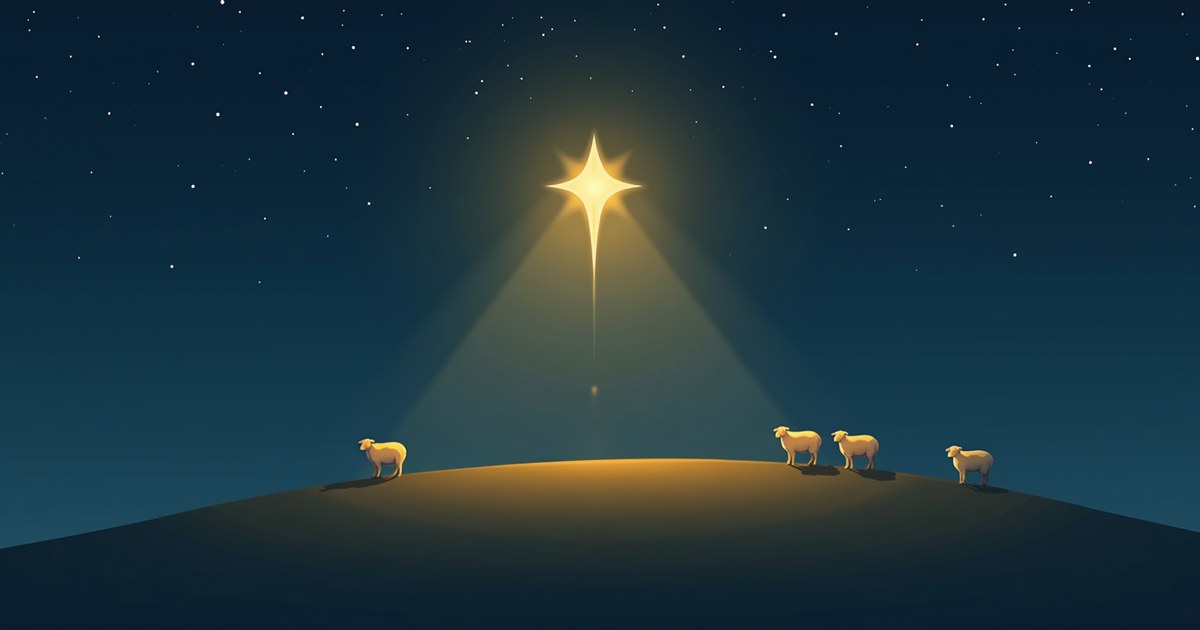
Luke’s account is deliberately plain about who received this message first: not the religious establishment in Jerusalem, not the political powers in Rome, but shepherds — low-status workers doing a night shift in a field. “An angel of the Lord appeared to them, and the glory of the Lord shone around them, and they were terrified” (Luke 2:9). What followed was not a vague blessing but an announcement with content: “Do not be afraid. I bring you good news that will cause great joy for all the people. Today in the town of David a Savior has been born to you; he is the Messiah, the Lord” (Luke 2:10-11).
Only after that announcement does the full chorus appear: “a great company of the heavenly host appeared with the angel, praising God and saying, ‘Glory to God in the highest heaven, and on earth peace to those on whom his favor rests'” (Luke 2:13-14).
Peace, Specifically — Not Just Calm
The peace announced here is not the absence of conflict in general. It is shalom in its fullest biblical sense — a restored right relationship between God and the people He favors, made possible by the Savior just announced. This is why the peace didn’t arrive as a ceasefire between nations. Herod was still on the throne. Rome still occupied Judea. The shepherds went back to their flocks the next night. What had changed wasn’t the political situation — it was that God had, for the first time, become reachable in human flesh.
Paul later makes this connection explicit: “since we have been justified through faith, we have peace with God through our Lord Jesus Christ” (Romans 5:1). The peace the angels sang about is peace with God first — the kind of peace that makes every other kind possible, but that no political settlement could ever produce on its own.
Why the Word “Goodwill” Matters
Some translations render the angels’ words as “peace, goodwill toward men” as if goodwill were something being offered generally to humanity, no conditions attached. Older and more precise translations, following the earliest Greek manuscripts, render it “peace to those on whom his favor rests” — the peace is directed toward those who receive the Savior being announced, not distributed automatically regardless of response. That distinction matters: Christmas isn’t a message that everything is already fine. It’s an invitation into the relationship that makes things fine.
A Peace Still Being Completed
Two thousand years later, it’s obvious that “peace on earth” in the fullest sense hasn’t yet arrived — wars, corruption, and grief did not end on that first Christmas morning, and Scripture never claimed they would. What the angels announced was the beginning of God’s peace project, not its completion. The New Testament looks forward to the day when Christ returns and peace is finally total: “He will judge between the nations… nation will not take up sword against nation” (Isaiah 2:4). Between Bethlehem and that day, believers live in what theologians sometimes call the “already and not yet” — peace with God secured now, peace on earth still being worked out.
What This Means for This Christmas Eve
Whatever this year has held — for a family, a parish, or a nation — the angels’ message was never contingent on the news being good that particular night. It was an announcement that God had entered the mess Himself, in a stable, to a family with no better lodging than a manger could offer. That is worth pausing to remember, however this Christmas Eve finds you.
What Scripture Says About the Peace of Christ
Jesus told His disciples directly, “Peace I leave with you; my peace I give you. I do not give to you as the world gives” (John 14:27) — a peace deliberately distinguished from the world’s version, which depends on circumstances staying favorable. Paul writes of “the peace of God, which transcends all understanding” guarding hearts and minds (Philippians 4:7) — peace as protection, not just feeling. And Isaiah’s prophecy of the coming child names Him directly: “he will be called… Prince of Peace” (Isaiah 9:6) — the title the angels’ announcement was fulfilling that night.
Frequently Asked Questions
What does “peace on earth, goodwill toward men” actually mean?
It announces peace with God made possible through Christ’s birth, directed toward those who receive Him — not an automatic end to worldly conflict, which Scripture never claimed would happen immediately.
Who did the angels appear to first?
Shepherds in the fields near Bethlehem — low-status night workers, not religious or political leaders, underlining that the good news was for ordinary people first.
Has “peace on earth” happened yet?
Not fully. Christians understand the angels’ announcement as the beginning of God’s peace project, with its full completion still awaited at Christ’s return.
Final Thoughts
The angels didn’t sing “peace on earth” because the world was suddenly at peace. They sang it because peace had just become possible — through a child, in a manger, in a town too small for anyone important to notice. That is still the claim this Christmas Eve: not that everything is fine, but that God has come near enough to make it so.
Celebrate Christmas Eve With Us
Many of our congregations hold a special Christmas Eve service. Contact your nearest parish for this year’s details.
General seasonal devotional content (Luke 2, Romans 5, John 14, Isaiah 2, Isaiah 9); no organization-specific claims. Compiled by the Editorial Desk.